Identity
The same customer rarely looks the same in every system. They're an email in your marketing tool, a phone number in your CRM, a loyalty ID at the till, and an anonymous visitor on your app before they ever sign in. Identity is how Pulse recognizes that all of those are one person — and links them together automatically.
This is what makes a single, unified profile possible. You don't tell Pulse who matches whom; it works it out for you as data arrives.
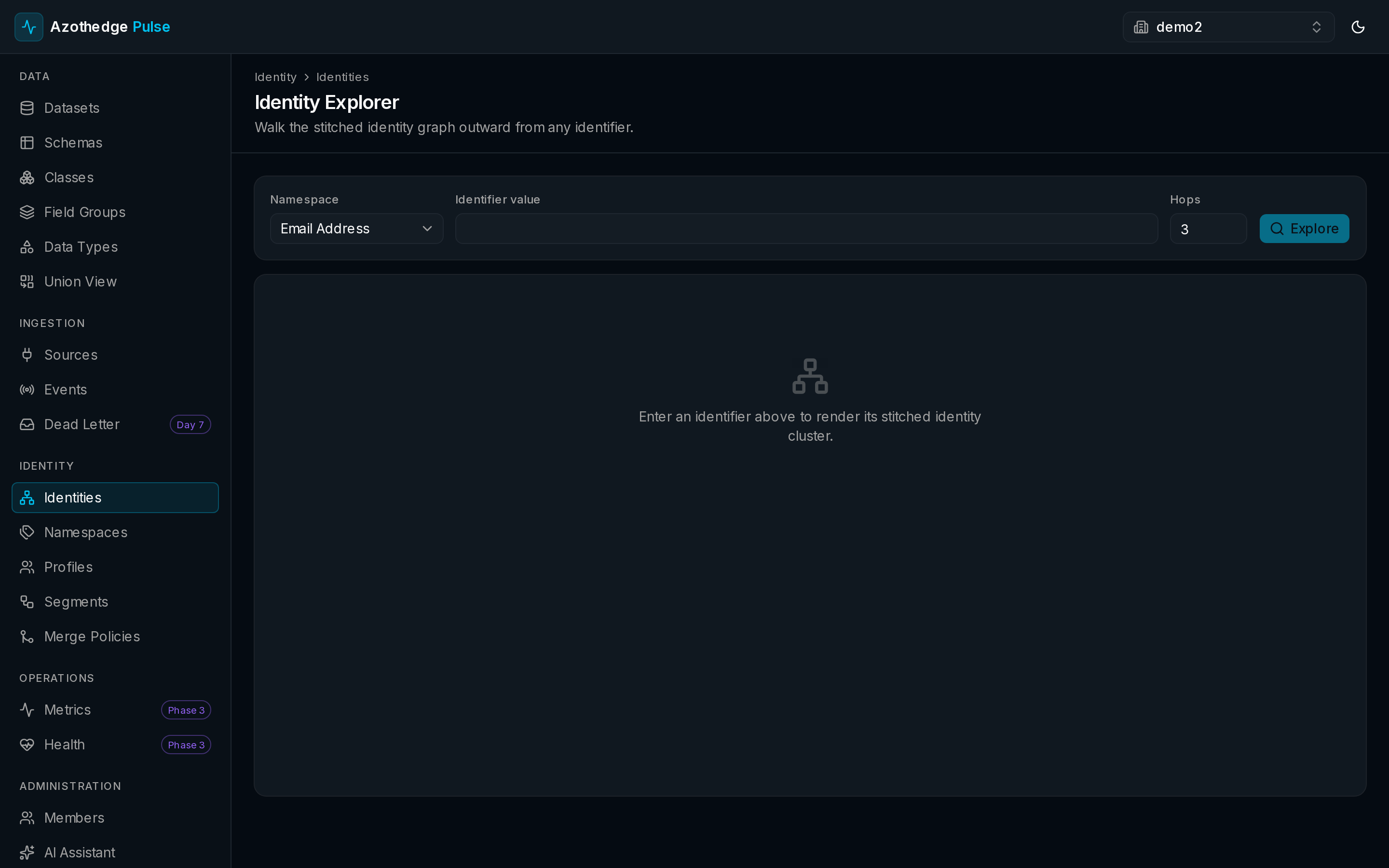
Why identity matters
Without identity resolution, the same person counts as several different customers — one per system they appear in. That makes basic questions impossible to answer honestly: how many real customers do we have?, has this person already bought from us?
By recognizing one person across every identifier, Pulse lets you:
- See the whole customer instead of a fragment in each tool.
- Avoid double-counting the same person who shows up in several systems.
- Build accurate audiences from everything you know, not just one channel.
Identifiers and namespaces
An identifier is any value that points to a person — an email address, a phone number, a loyalty ID, an anonymous app ID. A person usually has several.
A namespace is the label for a type of identifier. Email is a namespace; phone is another; loyalty ID is another. Namespaces tell Pulse what kind of identifier it's looking at, and how to standardize it — so the same email written two slightly different ways is recognized as one.
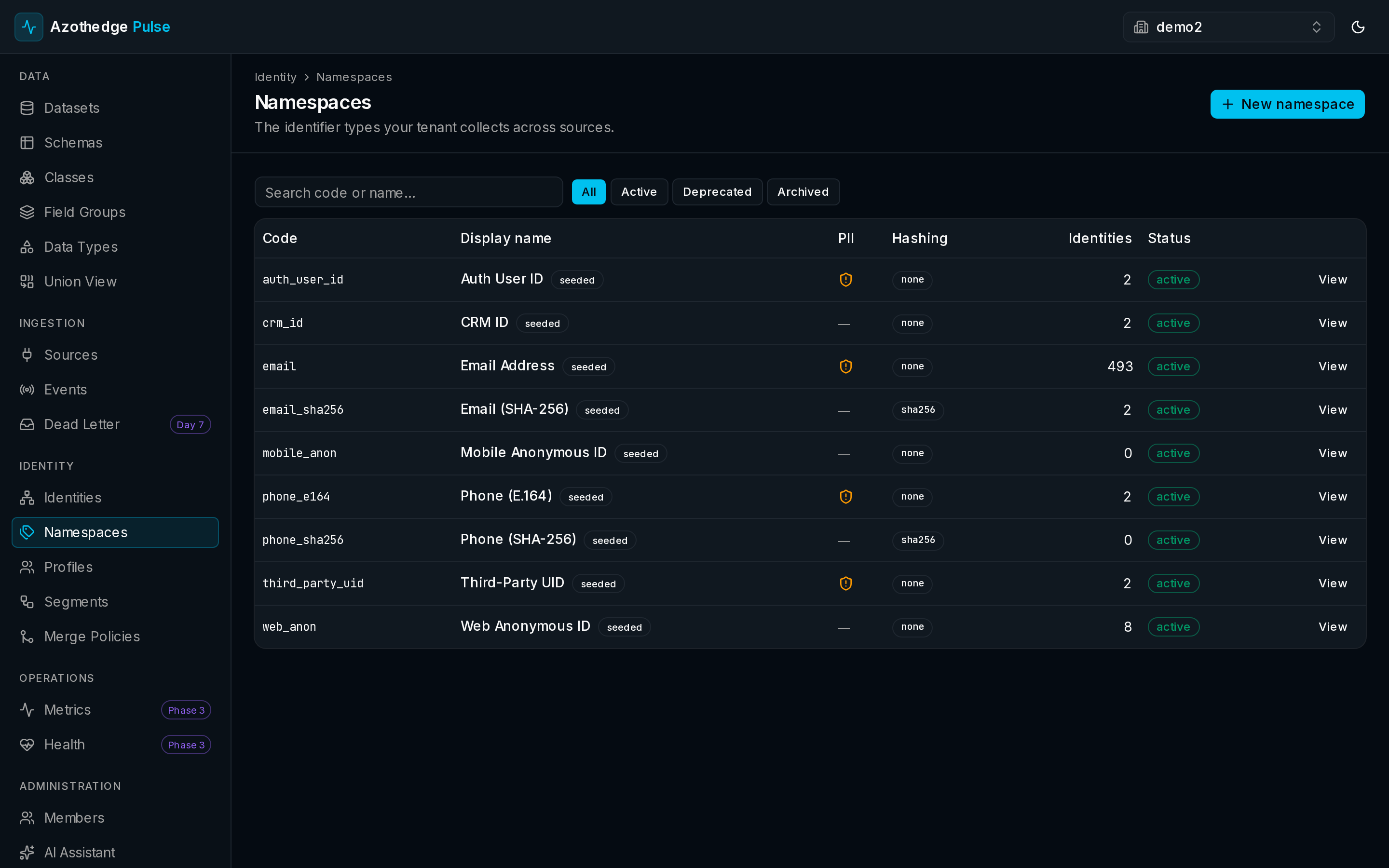
Pulse comes with the common namespaces ready to go, and you can add your own. See Manage namespaces for how.
Linking is deterministic, not guesswork
This is the part that matters most: Pulse links records based on shared identifiers, not on statistical guessing. If two records carry the same email, or one record links an email to a phone and another links that phone to a loyalty ID, Pulse connects them with confidence.
The result is one profile per real person — built from solid evidence, not probability. You can trust that two records were merged because they genuinely point to the same individual.
One person, many identifiers
A customer might be known by an email today, a phone number tomorrow, and an anonymous app visit before they ever signed up. Pulse stitches these together so they all point to the same profile, the moment the connecting evidence arrives.
How identity powers profiles
Identity is the engine underneath every customer profile. As Pulse links identifiers into one person, it assembles everything known about them — attributes, identifiers, and activity — into a single, continuously updated view. When a new connection is discovered, the profile reflects it within moments.
In short: identity decides who a record is about, and profiles assemble what you know about that person.
Next steps
-
Customer profiles
See how linked identities become one unified view of each customer.
-
Manage namespaces
Add and configure the identifier types Pulse recognizes.